

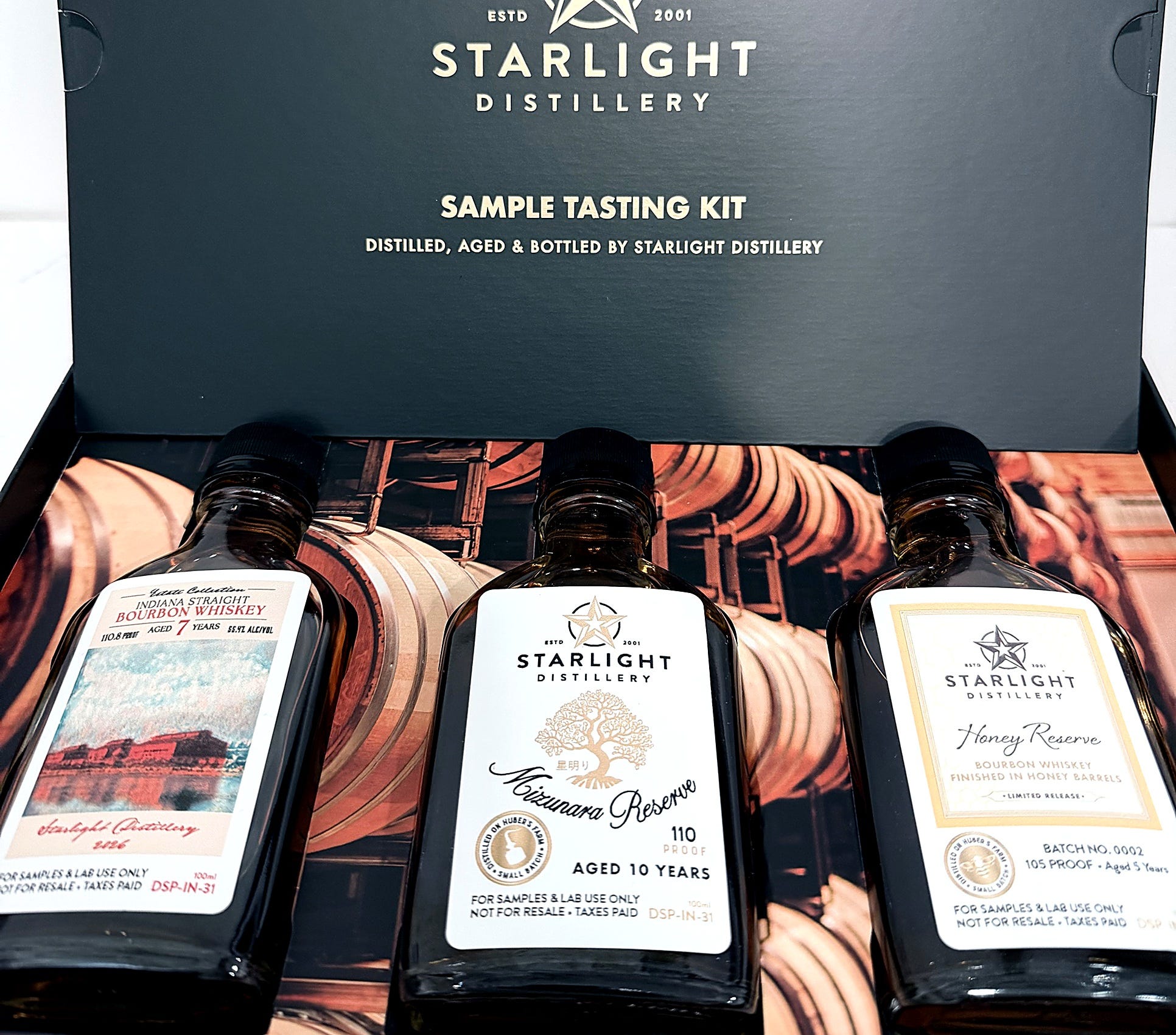
What is estate whiskey, and why it matters
Most whiskey travels. The grain comes from one place, the distilling happens in another, the aging in a third. Estate whiskey is the opposite: the grain is grown, milled, cooked, fermented, distilled, barreled, aged and bottled on the same land. That gives you a whiskey shaped by one place’s soil, water and climate, and a supply chain you can actually trace.
“Estate” used to be an unregulated word. The Estate Whiskey Alliance, a program from the University of Kentucky, now runs an Estate Whiskey Certified mark with two hard rules: every production step happens on the estate, and at least 67% of the mash bill grain is grown on land the distillery owns or controls. The percentage on the bottle tells you how much came from the estate; 100% means every grain did.
Why care? Because it rewards distilleries that farm, it keeps “estate” from turning into a marketing word like “small batch,” and it lets you taste a claim you can verify.
Meet Starlight
Starlight Distillery (est. 2001) sits on the Huber family farm in Borden, Indiana. Ted, Blake and Christian Huber hand-selected the barrels in this kit. They distill on Vendome copper pot stills and age in the original red warehouses, with heirloom corn and Indiana rye grown on the farm.
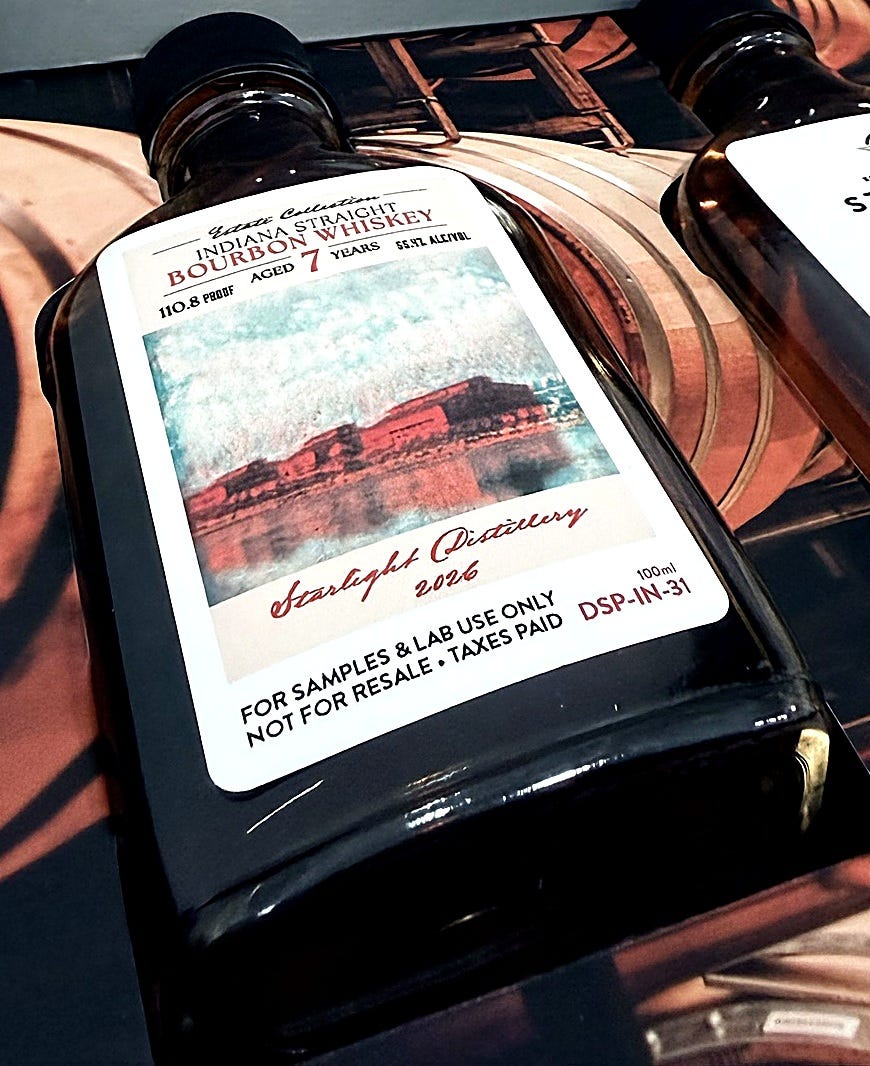
1. Estate Collection 7-Year Indiana Straight Bourbon
Price segment: Under $100 ($59.99) | Availability: Allocated, very limited (distillery and online; sold from October 3, 2026)
110.8 proof, 7 years, 80% estate-grown grain. Heirloom corn, Indiana rye and malted barley, sweet mash fermented, double pot distilled on Vendome copper stills, entered at low proof and aged slowly. Starlight says each barrel was hand-selected by Ted, Blake and Christian Huber and bottled only at full maturity.
The craftsmanship is in the barrel and the warehouse. This bourbon spent its seven years in the distillery’s original red warehouses, which Starlight describes as a dynamic aging environment that pushed the whiskey to its peak. Low barrel-entry proof and slow aging are choices that build depth over time, and you can taste the intent in how the pieces fit together.
Nose: Beautiful caramel and vanilla up front, with toasted oak and brown sugar, and hints of fruit behind them. A rich, inviting aroma.
Palate: It carries many of the same notes as the nose: rich caramelized sugar and vanilla, toasted oak, and hints of coconut and baking spice. The sweetness is well balanced by the oak and spice, and the texture is buttery and viscous.
Finish: Long and warming, with oak, spice and a confectionary sweetness. At 110.8 proof, it preserves the character of this bourbon beautifully.
In short: A rich, complex aroma, sweet caramel and vanilla forward, a buttery, viscous palate and a warm, lingering finish.
Score: 8.5/10. Verdict: BUY.
Hats off to the Huber family. This is a rich, complex, layered bourbon that reflects a deliberate process and the hand selection of these barrels.
Where to find it: the distillery in Borden (19816 Huber Road) and starlightdistillery.com. Seelbach’s listed it as a pre-sale at $59.99 plus shipping and showed it out of stock with a notify-me option when we checked on October 17. At $59.99, I’m buying two bottles, not just one.
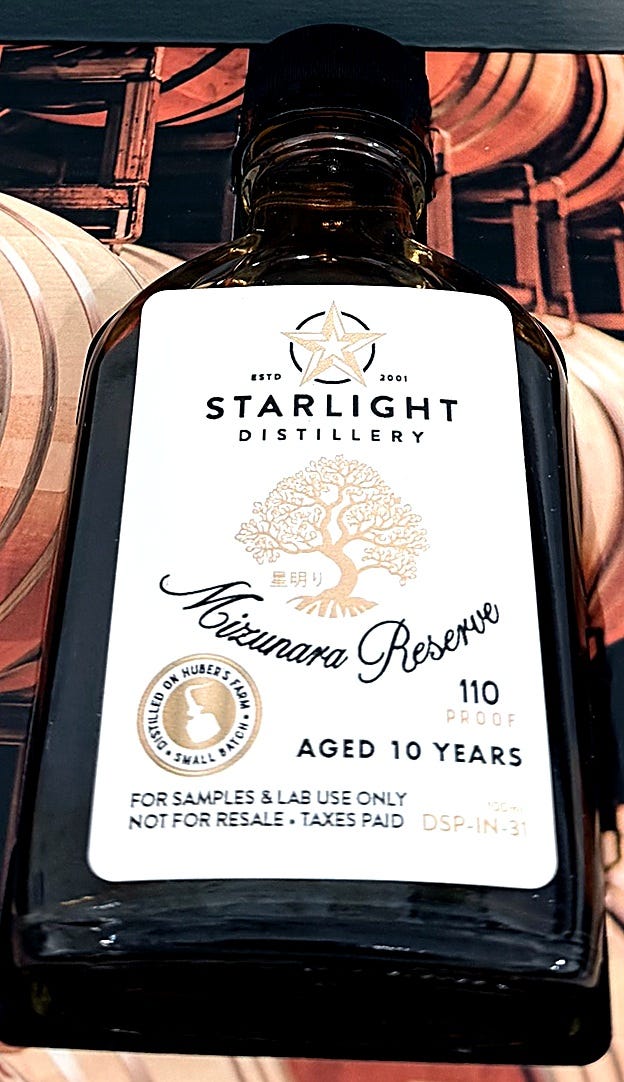
2. Mizunara Reserve 10-Year
Price segment: $100 and Up ($149.99) | Availability: Unicorn. Just 250 bottles from a single Mizunara cask: 200 went to online-lottery winners and 50 sold at the distillery on September 12, 2026.
110 proof, 10 years, single barrel. Starlight’s signature three-grain mash bill (60% corn, 20% rye, 20% malted barley), matured in new charred American oak, then finished in Japanese Mizunara oak from trees 200 to 500 years old. Starlight calls it the oldest bourbon it has finished in Mizunara to date. The barrel entered at 108 to 116 proof.
Nose: Complex, with real depth. Sandalwood, coconut, vanilla bean and warm baking spice.
Palate: Creamy vanilla and caramelized sugar with soft spice, layered with a subtle, exotic wood character.
Finish: Long and elegant, gently spiced, with lingering oak and a delicate sweetness.
Score: 8.6/10. Verdict: BUY.
Where to find it: Buy it direct from Starlight: Mizunara Reserve | Starlight Distillery, $149.99. It is a unicorn-level release, so check stock before you plan around it. If a bottle shows up on the secondary market, compare it to the $149.99 retail price and never pay a stranger up front.
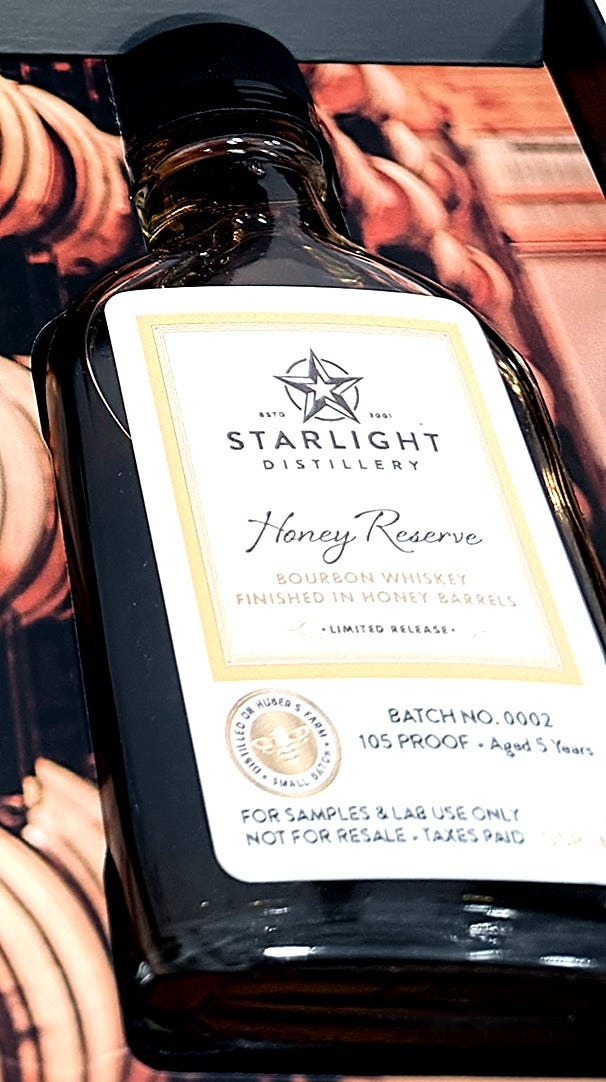
3. Honey Reserve (Batch 0002)
Price segment: $50 to $100 (about $65) | Availability: Limited release
105 proof, aged 5 years per our sample label, finished in barrels that previously held honey from the estate’s own bees.
Nose: Honey, cream frosting, vanilla, toasted oak and a hint of light fruit. Very subtle and elegant.
Palate: Apple, warm baking spice and caramel, with sweetness from the honey, mild pepper and oak. Very well balanced.
Finish: Smooth, with lingering honey spice and a warm oak finish.
Score: 8.5/10. Verdict: BUY.
Awards: Batch 0001 of the Honey Reserve won a Gold Medal at the 2025 John Barleycorn Awards and Double Gold (96 points) at the 2026 San Francisco World Spirits Competition. Our sample is Batch 0002, so the medals belong to the first batch, but it is the same Honey Reserve line.
Where to buy: Start with the distillery at starlightdistillery.com (its “Where to Buy” page lists current options). You can also check availability or purchase through retailers like Seelbach’s. Confirm stock before you drive anywhere.
Our ranking
Mizunara Reserve 10-Year (8.6, BUY). My first choice. Ten years of age, a single barrel and that exotic Mizunara character make it the most complex pour of the three, with sandalwood, coconut and vanilla bean in a long, elegant finish. At $149.99 and unicorn-level scarcity, it is the one to grab if you see it.
Estate Collection 7-Year (8.5, BUY), tied for second. Rich, layered and generous, with caramel, brown sugar and oak at 110.8 proof. At $59.99 it is the best value of the three, if you can find one.
Honey Reserve (8.5, BUY), tied for second. Subtle, elegant and beautifully balanced, with honey sweetness that never takes over the oak. At about $65 it is the easiest of the three to pour for a friend.
All three are a BUY.
Closing
What makes this kit special is where it comes from. Because Starlight grows its own grain and does the distilling, aging and bottling on the Huber family farm in Borden, Indiana, every bottle carries a sourcing story you can trace from field to glass. You can taste the craftsmanship in the heirloom corn, the hand-selected barrels and the patience in the warehouse. Three different bottles, three BUY verdicts, and one family clearly proud of what it makes. Starlight is a distillery to watch, and estate whiskey is better for having the Hubers in it. Cheers to the Huber family and the whole Starlight team.
Thank you
A big thank-you to the whole Starlight Distillery team, and especially Christian Huber, for sending us the Sample Tasting Kit and trusting us to review it. This review is based on the three 100ml samples in the kit. Per our policy, we are willing to purchase a bottle at retail price, but media samples are welcome. Receiving a sample does not buy a good score: every bottle gets a straight BUY / TRY / PASS verdict.
All photos: The Bourbon Social. Sources: Starlight press sheets and Estate Whiskey Certified handout; Breaking Bourbon; The Whiskey Wash; Drinkhacker; The Daily Pour.